Introduction
In 2021, I identified a gap in how Castleberry ISD communicated, marketed, and represented its brand. Messaging was inconsistent, communication was often reactive, and there was no centralized strategy connecting the district’s goals to the way it showed up across channels.
I developed and presented a proposal to leadership suggesting the creation of a communications/marketing position. The role was approved, I was selected to lead it, and over the next several years, I built the systems, standards, campaigns, and processes that reshaped how the organization communicates.
Project at a Glance
Role
Communications Coordinator and function lead
Organization
Castleberry Independent School District
Timeline
2021–2026
Scope
Brand strategy, communications planning, digital platforms, campaigns, governance, content systems, and stakeholder alignment
Key Outcomes
Organization-wide brand and communications systems established
Survey-informed channel strategy: Parent feedback helped shape how direct, internal, and public-facing communication was assigned across platforms.
99%+ audience reach through ParentSquare (newly implemented mass-communications platform)
20.6% YoY growth in direct messages sent using the implemented mass-comms platform
52.2% increase in average Facebook engagement per post
Expanded brand awareness and visibility: Supported a broader reputation and enrollment strategy during a period of 480% growth in a targeted audience segment.
01 — The Opportunity
Castleberry ISD did not have a centralized communications department or a unified approach to branding and storytelling. Campuses and departments often worked independently, which created inconsistent messaging, uneven visual standards, and delays in how information reached families, staff, and the broader community.
The district had strong programs, people, outcomes, and a web administrator, but lacked a system for consistently communicating the organization's value.
I saw an opportunity to build more than a communications role. I saw the need for a function that could connect organizational priorities, audience needs, brand expression, and day-to-day execution.
The initial need appeared to be stronger brand consistency. As the work progressed, it became clear that consistency alone would not solve the problem—the district first needed a brand system that accurately reflected how the organization was already recognized in the community.
In May 2021, I developed and presented a strategic proposal outlining how a centralized communications role could help the district:
strengthen trust and transparency
improve consistency across campuses and departments
clarify ownership of communication
support enrollment and recruitment
build a recognizable, credible brand
shift from reactive messaging to proactive storytelling
02 — The Strategy I Proposed
The proposal focused on building a communications function that was both strategic and practical. It needed to support long-term organizational goals while also improving the way daily communication was planned, created, and delivered.
The strategy centered on five priorities:
Centralized communications leadership
Establish clear ownership of messaging, timing, channel use, and brand consistency.
Brand standards and governance
Create a cohesive visual and verbal identity that could be used consistently across departments, campuses, campaigns, and physical spaces.
Cross-functional alignment
Work closely with leadership, campuses, human resources, student services, and other departments to ensure communication supported broader organizational priorities.
Channel strategy
Match messages to the right audiences and platforms rather than relying on the same approach for every communication need.
Proactive storytelling
Move beyond announcements and deadlines to consistently highlight people, programs, outcomes, and the district’s value to the community.
The goal was not simply to produce more content. It was to build a more coordinated, intentional, and sustainable way of communicating.
03 — From Proposal to Execution
Once the position was approved, I was selected to build and lead the district’s communications and brand function.
Over the following years, I translated the proposal into systems, processes, campaigns, and tools that could support both immediate needs and long-term growth.
What I Built
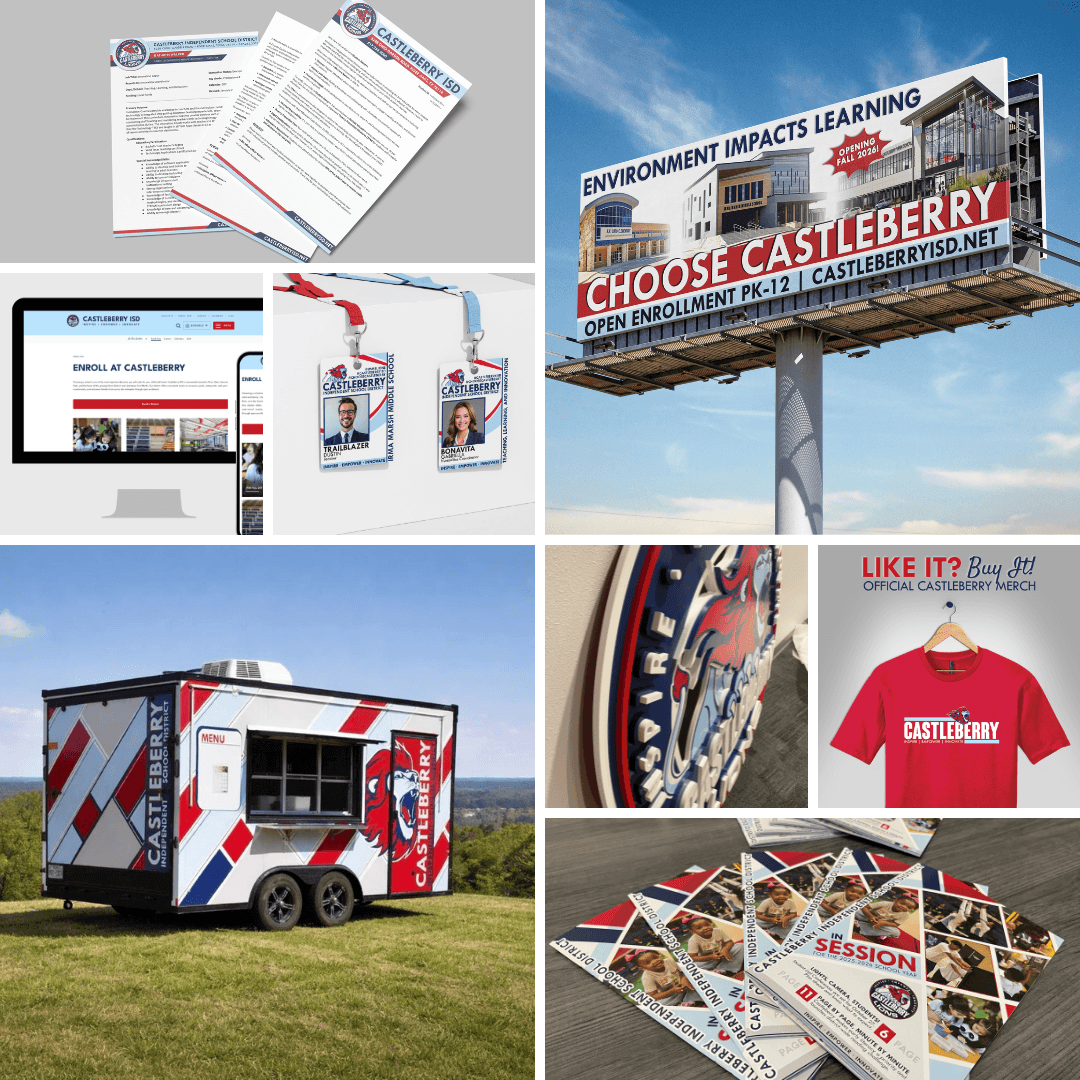
A unified brand system
The original proposal emphasized the need for greater brand consistency across campuses, departments, and communication channels. As I began settling into my role and observing how the brand appeared in practice, I identified a deeper issue: the district’s digital color palette did not align with the colors most visibly associated with the organization through athletics and community-facing environments.
That disconnect became the catalyst for a broader rebrand. I led the development and rollout of a more cohesive identity system that connected the district’s digital presence with the brand people already recognized in the community. The work expanded beyond streamlining the colors to adopting a new district logo, and streamlining previous versions of program/entity logos to align, while also developing brand standards, templates, publications, signage, merchandise, environmental branding, and tools that helped all employees apply the brand consistently.
Communication processes and governance
I created repeatable workflows that clarified how information should move through the organization, who was responsible for each step, and how messages should remain aligned across touchpoints.
A centralized digital communications platform
I helped lead the rollout and expansion of ParentSquare, including implementation support, templates, training, governance, and ongoing optimization.
A defined channel strategy
I clarified the role of each major communications channel, moving direct and operational family communication to ParentSquare while repositioning social media around storytelling, recognition, reputation, and community engagement. This reduced duplication, improved targeting, and allowed performance to be evaluated more intentionally.
A stronger website ecosystem
I supported the redesign and standardization of district and campus websites, improving navigation, accessibility, consistency, and content quality.
Integrated campaigns
I planned and executed campaigns across digital, print, social, direct mail, outdoor advertising, local media, and community channels.
Reusable resources for teams
I developed branded templates, toolkits, and campaign systems that allowed campuses and departments to carry out recurring work independently while maintaining quality and consistency.
A more proactive storytelling model
I expanded the district’s focus from routine announcements to stories that highlighted impact, outcomes, culture, and community value.
This work required both strategic direction and hands-on execution. I developed the systems, but I also wrote the copy, created the assets, managed vendors, trained users, analyzed performance, and adjusted the approach based on what the data showed.
04 — The Impact
What began as a proposal became a fully operating communications and brand function that changed not only how Castleberry ISD presented itself, but how the organization reached its audiences, selected its channels, told its story, and evaluated communication performance.
A clearer role for every channel
The districtwide ParentSquare implementation was designed not simply as a platform rollout, but as an opportunity to create a more intentional communications ecosystem informed by both stakeholder input and audience data.
I developed and led the implementation while guiding the campus communication team through the creation of a broader channel strategy. The team reviewed findings from the District Parent Communications Survey, considered operational needs across campuses and departments, and identified where families were experiencing communication overload, inconsistency, or confusion.
Using that input, I translated the group’s decisions into a final communication flowchart that clarified how messages should be distributed based on audience, relevance, privacy, and safety.
Previously, district social media often served as a catch-all for reminders, operational updates, event information, and public storytelling. Under the new approach, direct, student-related, and time-sensitive information—such as report card availability, attendance reminders, campus procedures, and events intended only for enrolled families—could be delivered through ParentSquare to the people directly affected.
Public-facing information remained on social media when broader awareness or participation served a clear purpose. For example, a report card notification belongs in ParentSquare because it is relevant to enrolled families. A Hispanic Heritage Showcase Expo belongs on social media when the wider community is invited to attend.
The strategy also supported safer communication practices by limiting unnecessary public visibility into internal campus activity and events intended only for students, staff, or enrolled families.
This was not simply a reduction in social media content. It was a shift toward more relevant, responsible, and purposeful communication across every channel.
Stronger social engagement through more selective publishing
As routine and operational communication moved to ParentSquare, Facebook and Instagram became more focused on storytelling, recognition, culture, organizational outcomes, and community pride.
During the first two full years after I assumed responsibility for district social media, Facebook engagement increased significantly compared with the previous baseline:
61% increase in total engagement during the first full year
69% increase in total engagement during the second full year
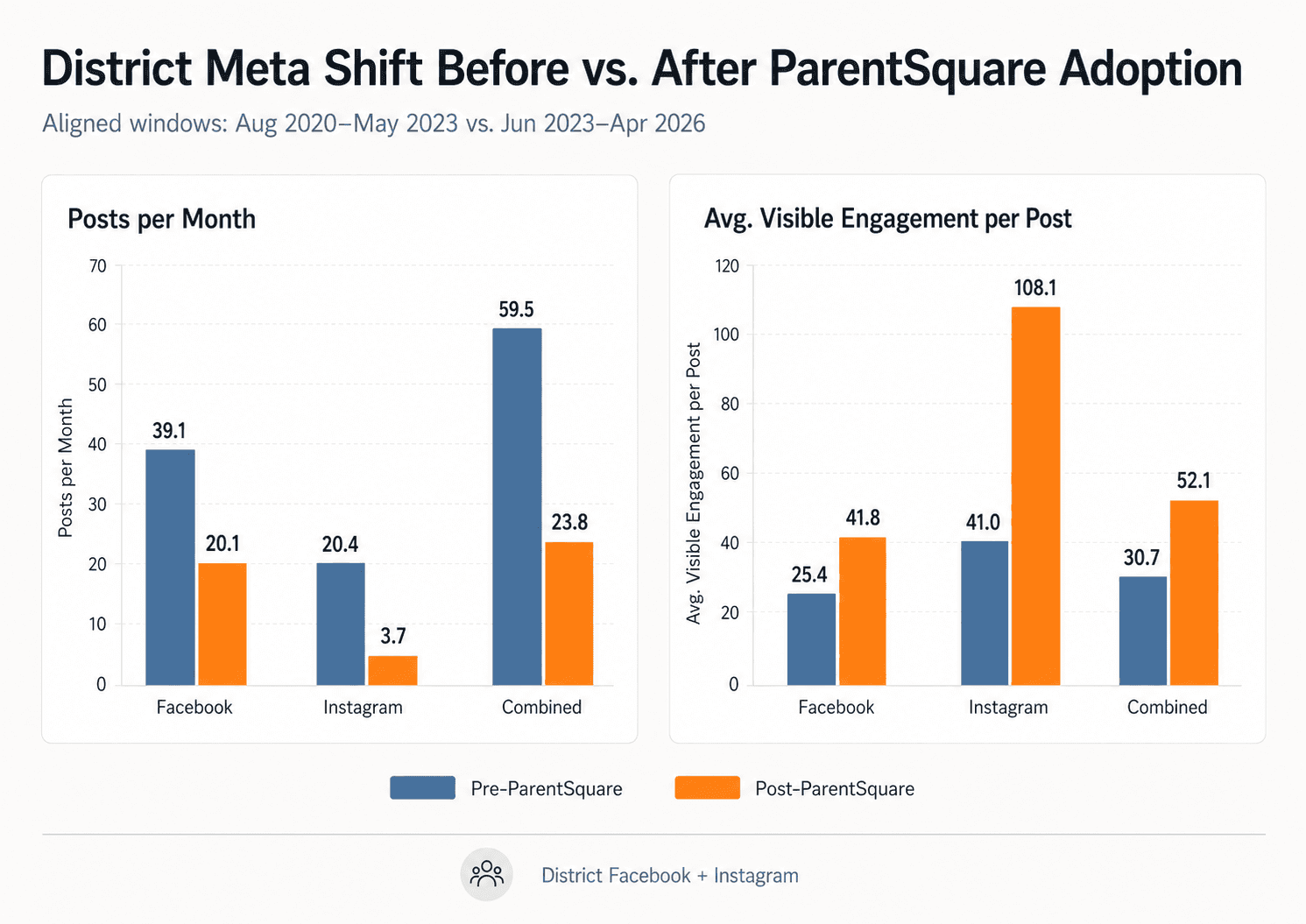
Following the districtwide ParentSquare rollout and broader channel-strategy shift, social publishing became more selective. Despite lower posting volume, average Facebook engagement per post increased from 26.1 before the rebrand to 39.7 afterward—a 52.2% increase.
The findings reinforced an important principle: publishing less did not mean communicating less effectively. Moving messages to the channels best suited to their audiences gave stronger public-facing content more room to perform.
Greater scale through direct communication
ParentSquare became the foundation for direct communication across the district, giving families more reliable access to information through their preferred channels—including email, text, and app notifications—while supporting more targeted, measurable outreach.
From August through May:
Direct messages increased by 20.6% (or 64,085 messages)
2024–2025: 311,172 direct messages
2025–2026: 375,257 direct messages
District communication consistently reached approximately 99% of intended recipients
Rather than depending on public social platforms to deliver essential information, the district developed a stronger owned-channel system that supported targeting, accessibility, translation, and measurable delivery.
A scalable communications ecosystem
The broader impact included:
clearer roles for direct, internal, and public-facing channels
stronger audience targeting and message relevance
reduced duplication and unnecessary public exposure
repeatable communication workflows and templates
greater consistency across campuses and departments
more intentional social storytelling
improved visibility into message delivery and engagement
greater capacity to refine communication using performance data
The most important result was not any single campaign, platform, or metric. It was the development of a connected communications ecosystem in which each channel served a defined audience and purpose.
05 — Before & After
Before
Social media carried operational updates, reminders, promotions, and public storytelling
Important information competed with recognition and community content
Communication was often distributed broadly rather than targeted
The organization had limited insight into whether intended recipients received or viewed messages
Campuses and departments used inconsistent processes and materials
Publishing more content was often treated as the primary way to increase visibility
After
ParentSquare became the primary direct-communication channel for families and staff
Facebook and Instagram focused more intentionally on storytelling, reputation, recognition, and community pride
Messages could be targeted by audience, school, grade, language, and communication need
Delivery, views, clicks, and engagement could be measured and evaluated
Social posting became more selective while average engagement per post increased
Templates, workflows, and governance supported greater consistency across the organization
From Realization to Reality
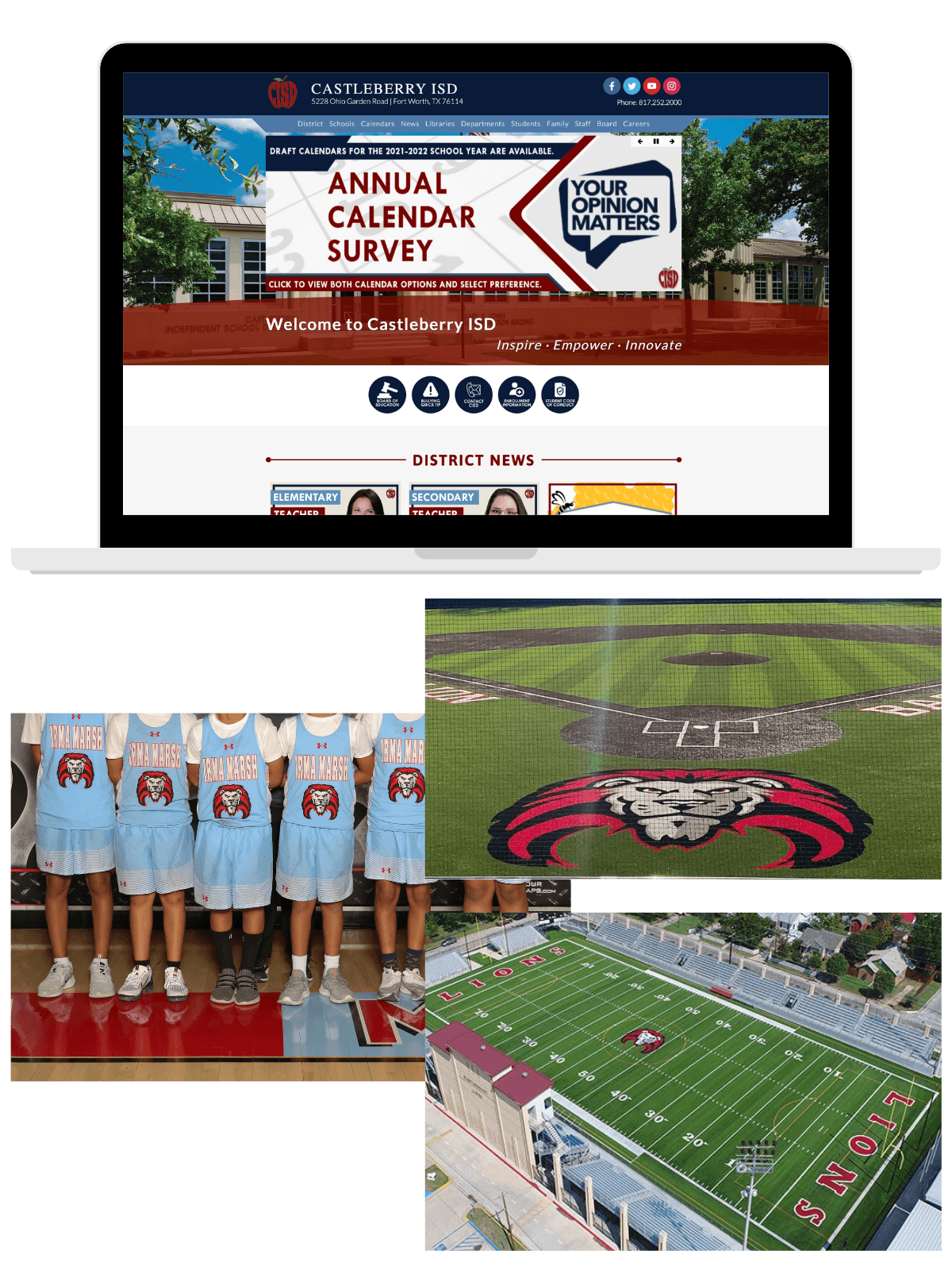
The district’s digital identity did not reflect the traditional red and light blue already recognized across athletics and community-facing spaces.
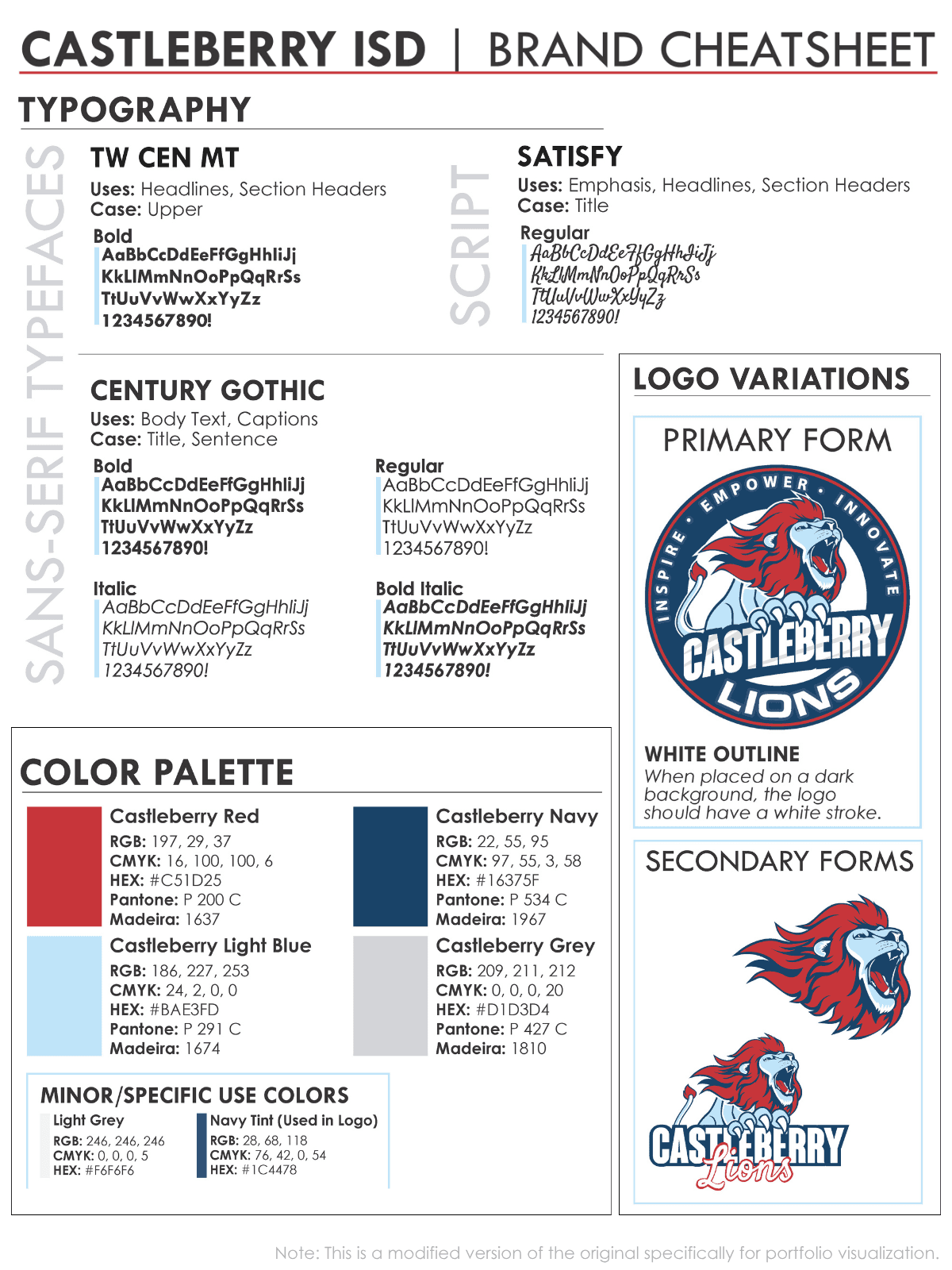
A unified identity system aligned district, campus, and program brands under consistent standards.
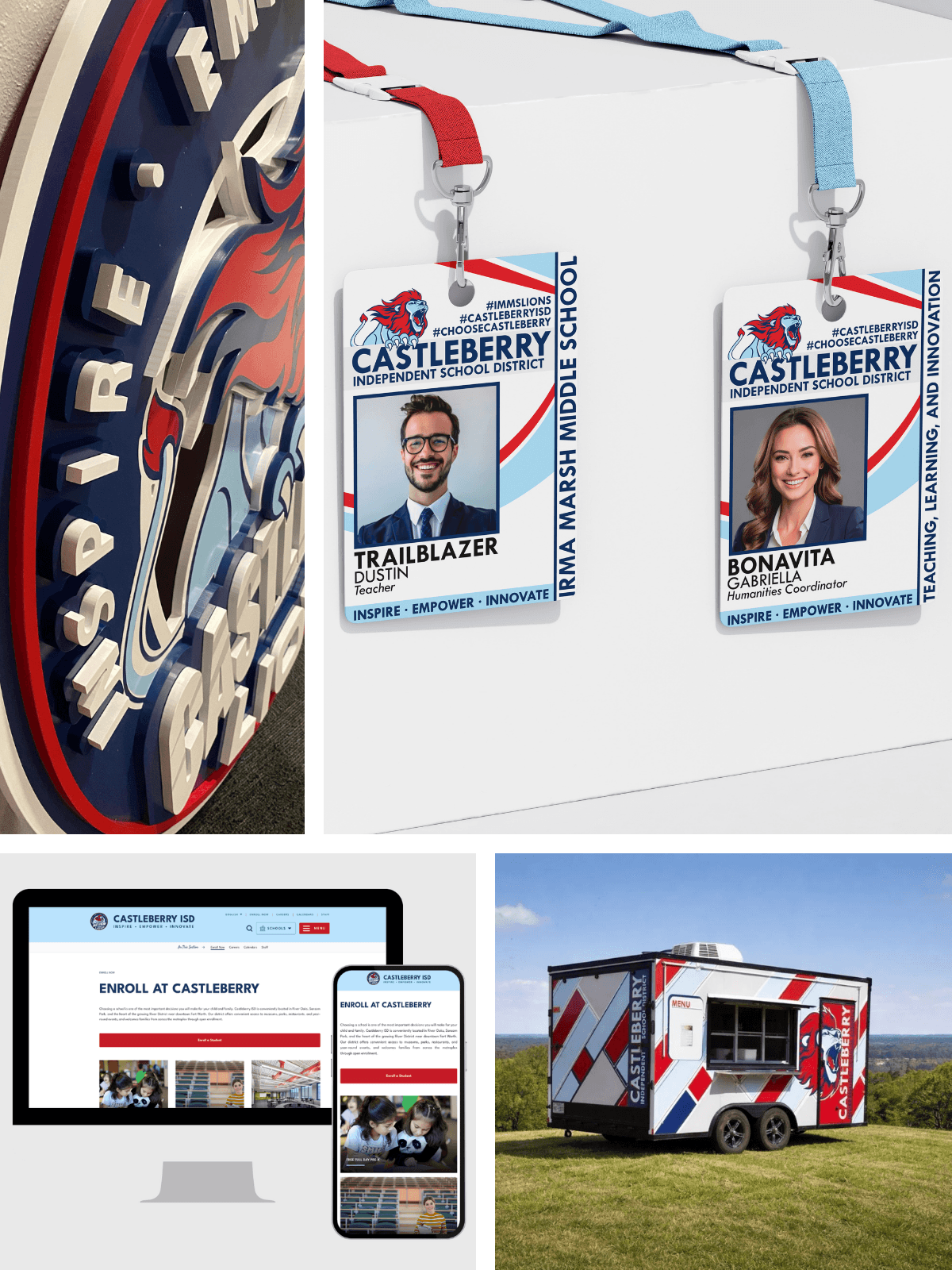
The system extended across digital platforms, campaigns, publications, signage, and physical environments.
06 — What This Work Demonstrates
This case study reflects how I approach marketing and communications: as both a strategist and a builder.
I am most effective when I can identify a gap, create a clear plan, bring people into the process, and build systems that make the work stronger and easier to sustain.
The function I proposed in 2021 ultimately became much more than a new position. It became the foundation for a more coordinated brand, stronger communication practices, better audience experiences, and more consistent storytelling across the organization.
Core Capabilities
Brand strategy and governance
Organizational communications
Integrated campaign planning
Digital platform implementation
Cross-functional leadership
Change management
Content strategy
Process development
Vendor and project management
Analytics and optimization